


Maxim-Zetkin-Pflegeheim Saalow, Berlin
Saalow Nursing Home, 2022
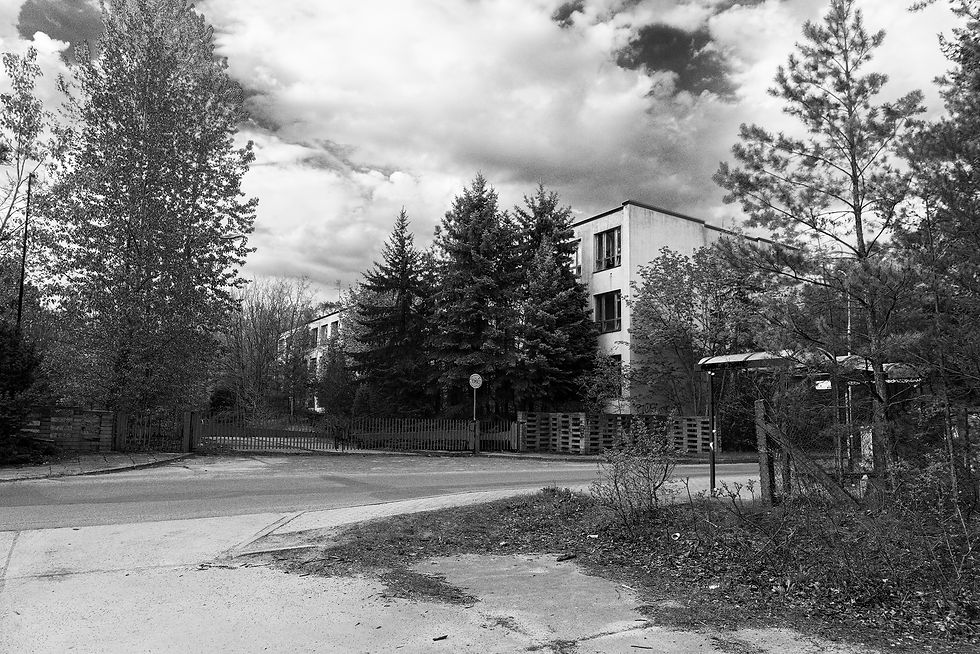


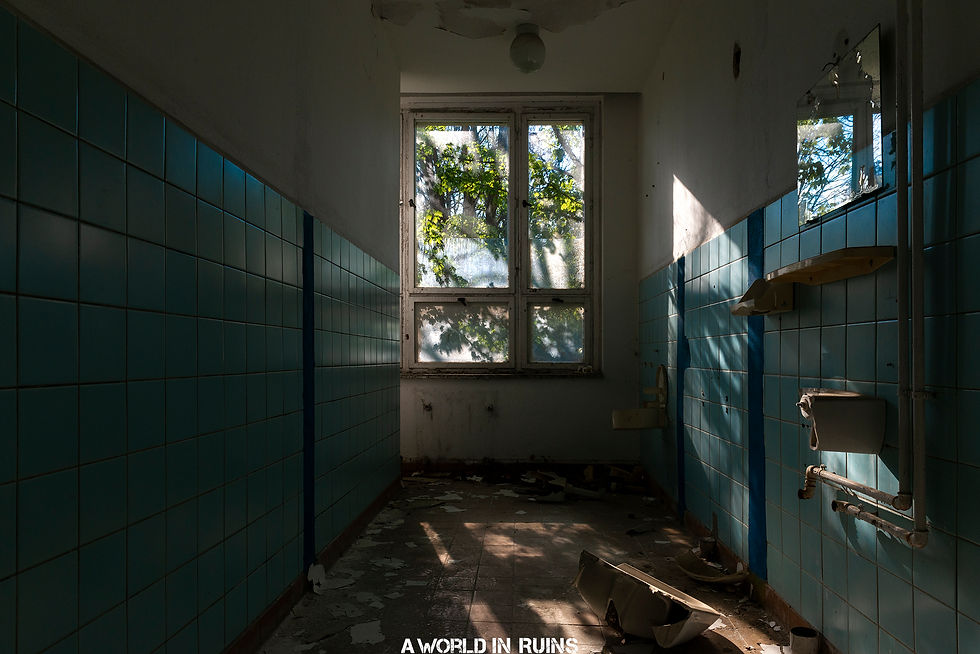


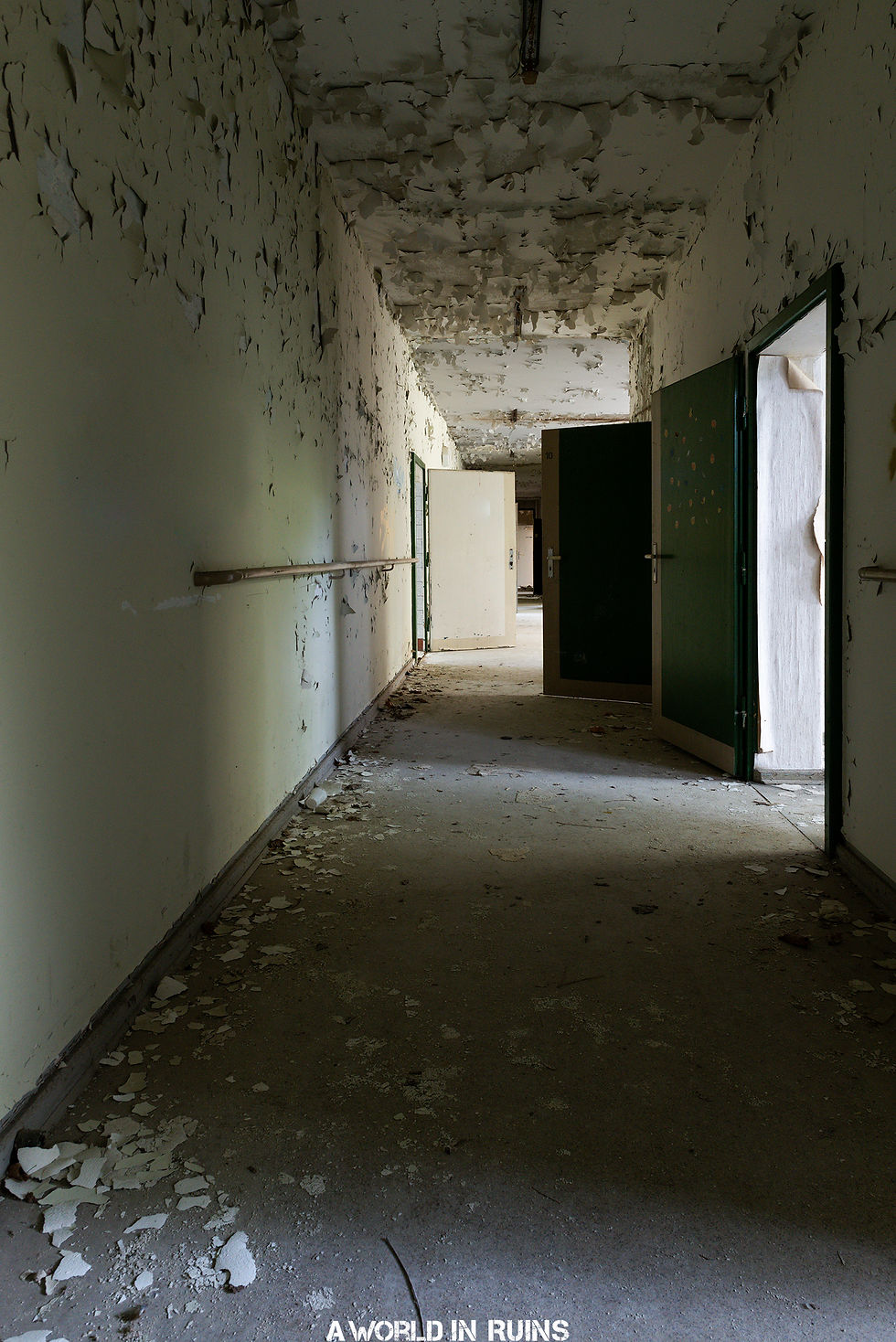


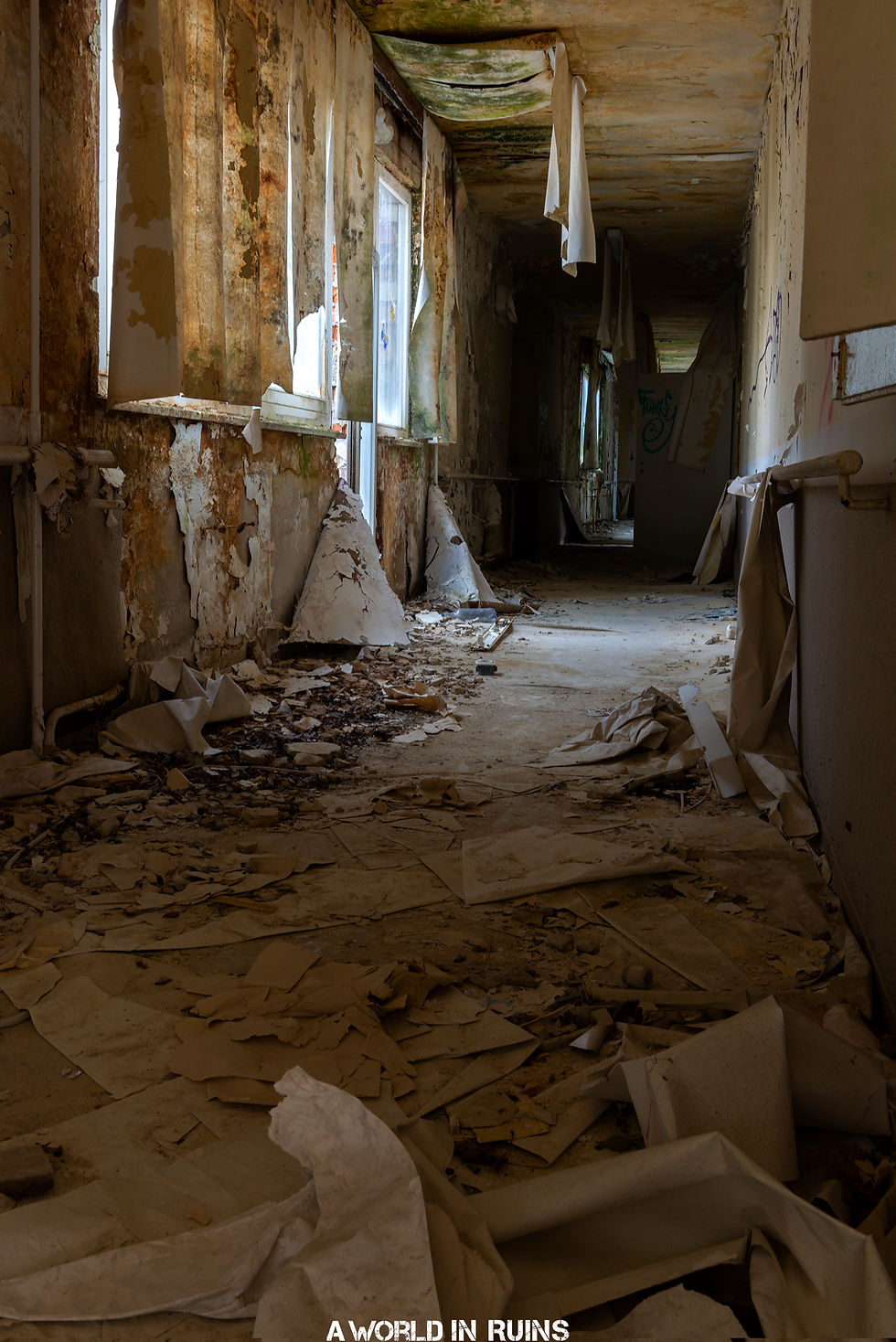
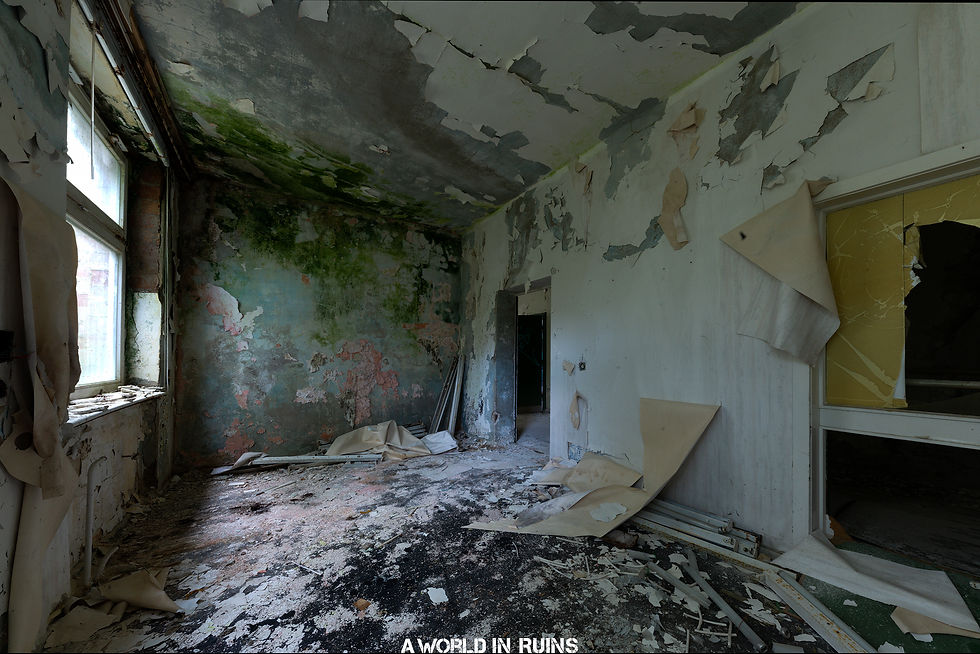


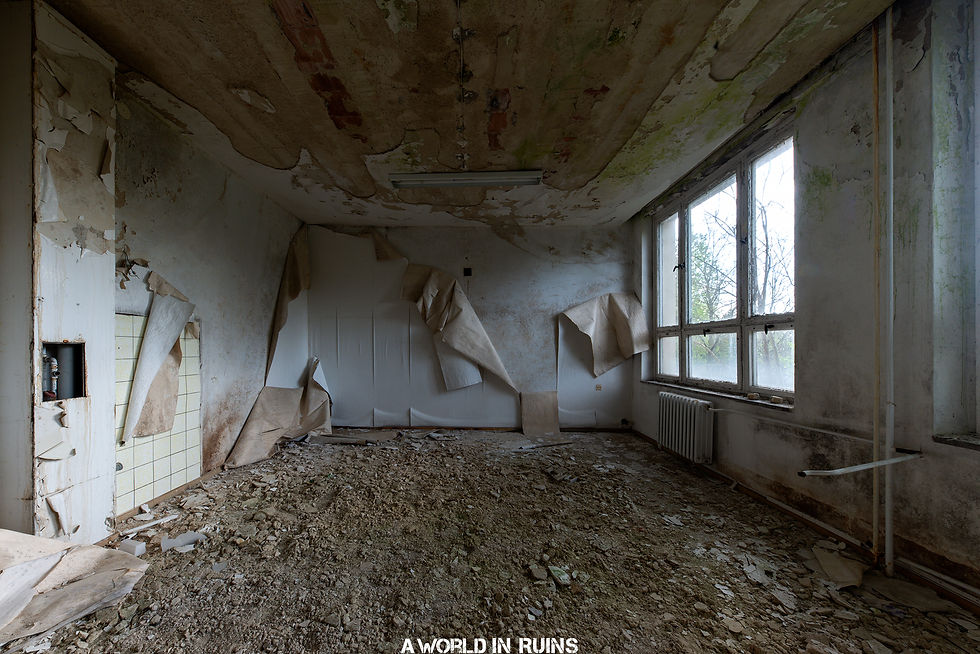


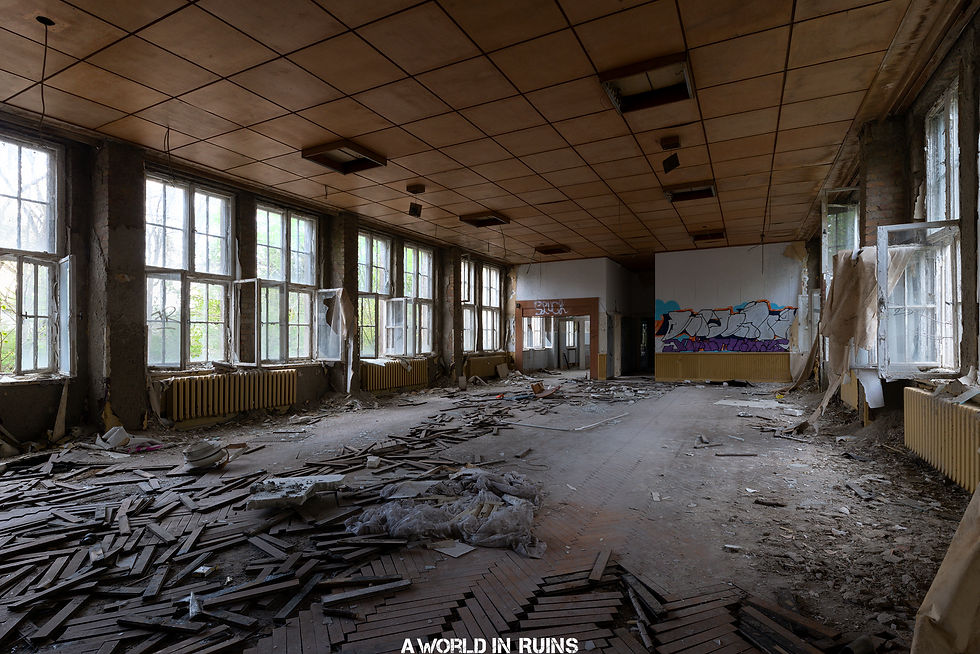

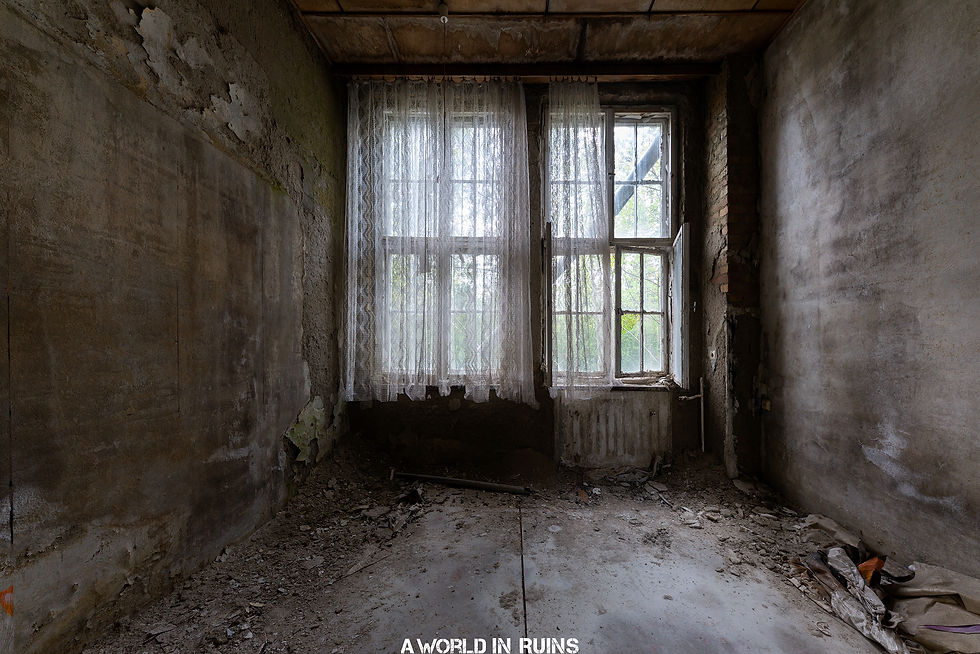


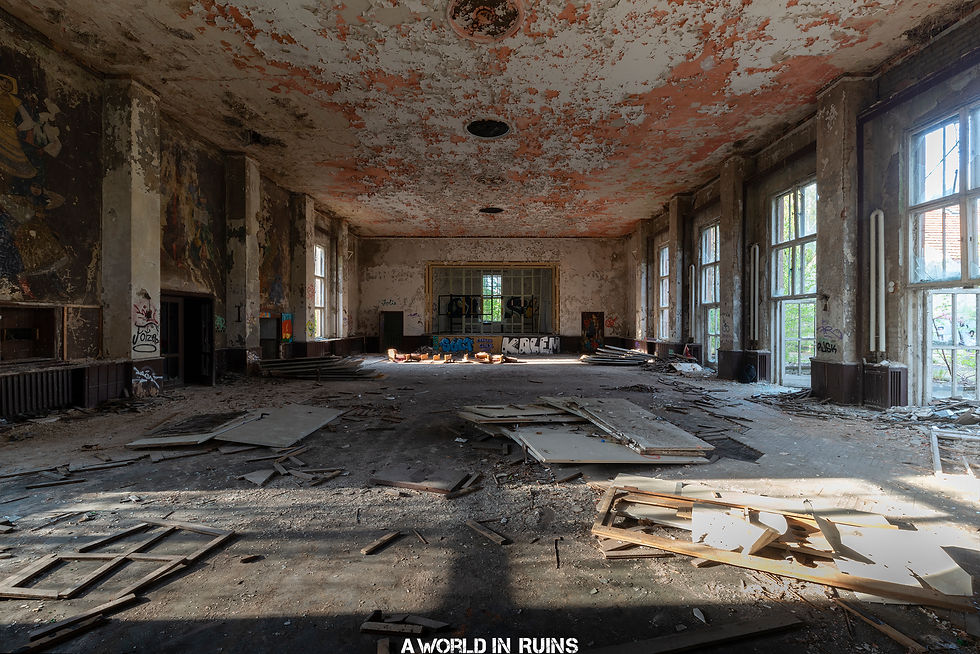


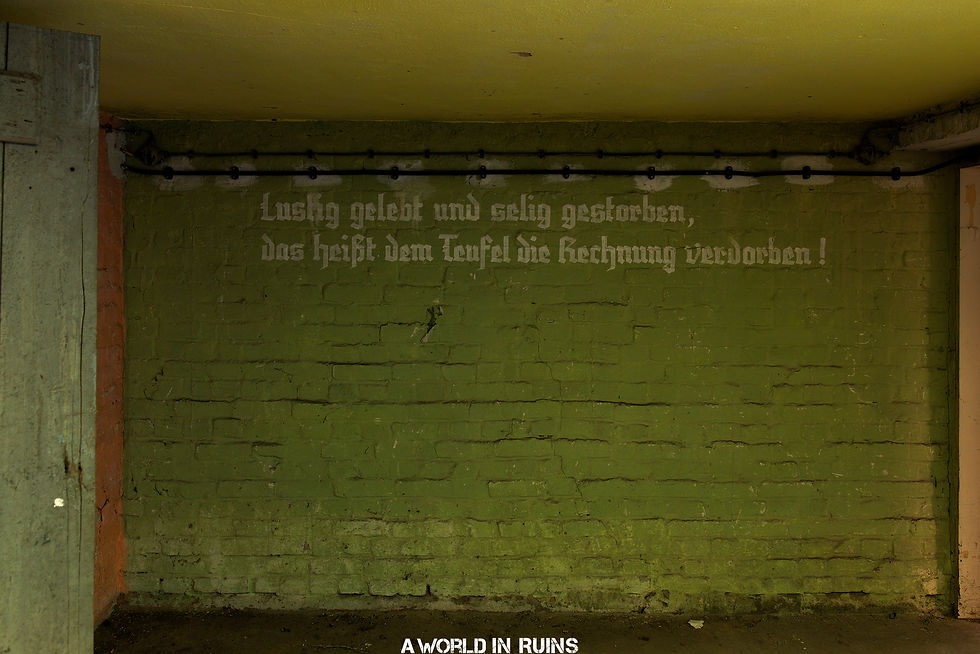


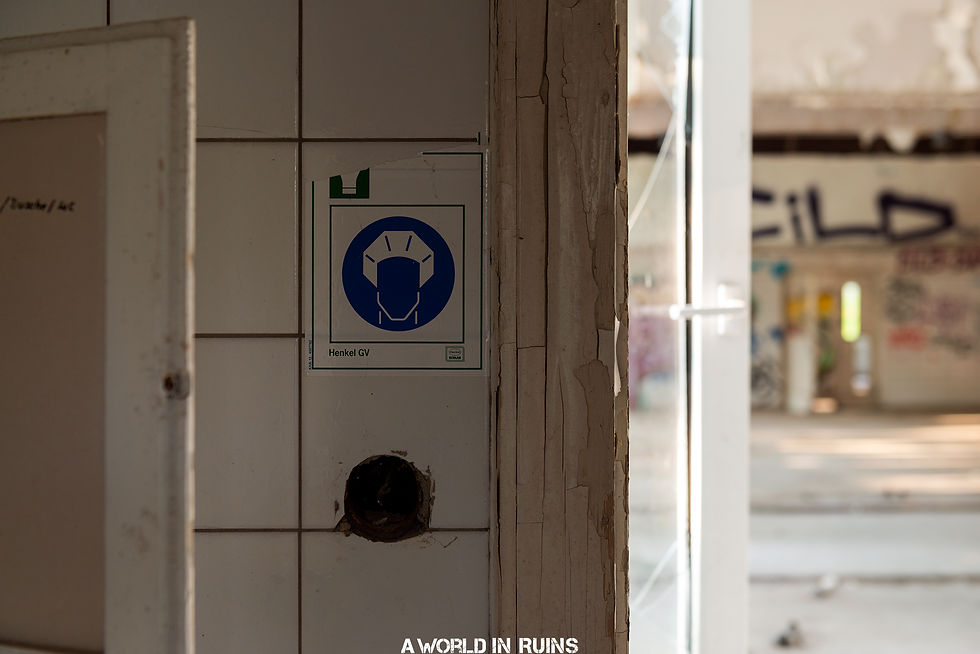


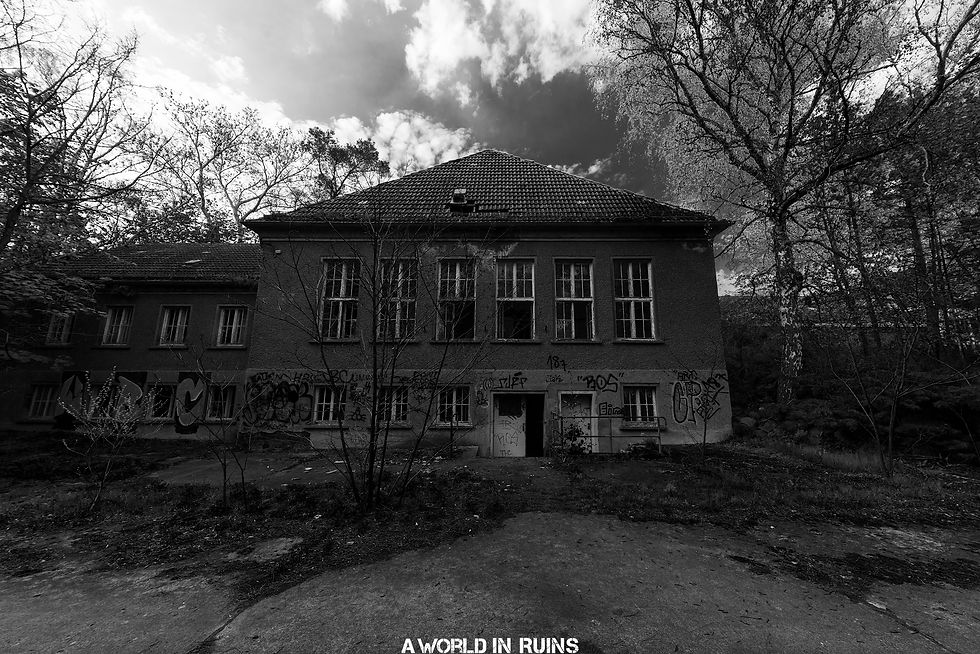


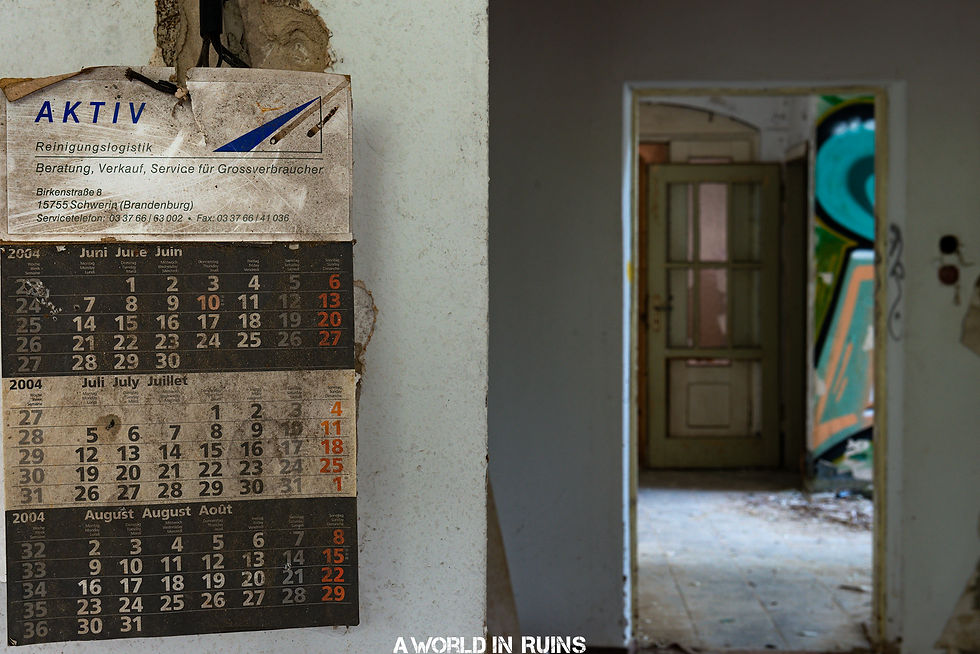


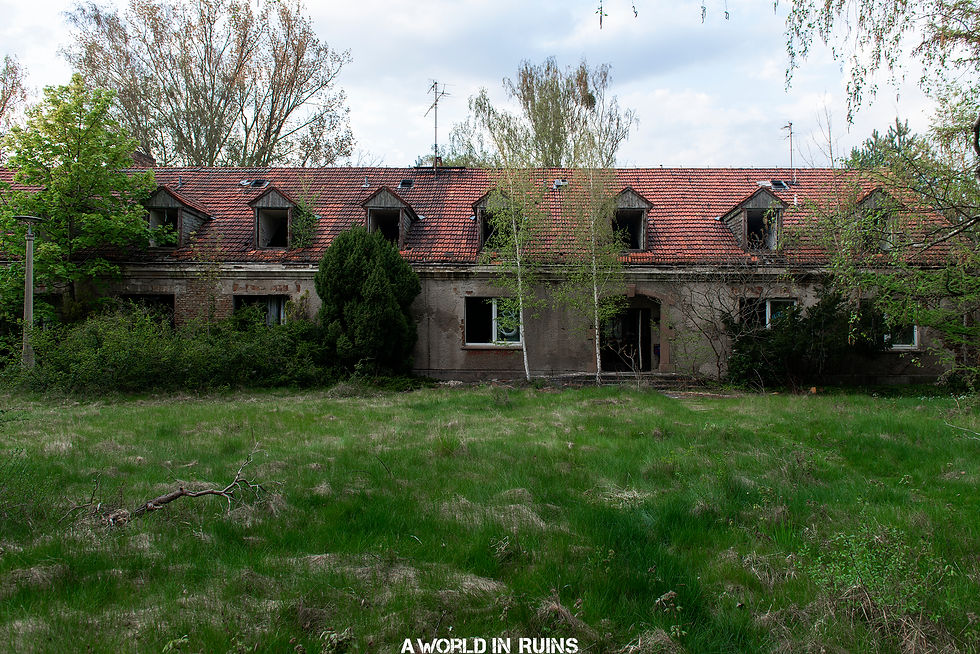


The final location on our tour across Berlin in spring 2022, a former DDR-era retirement and nursing home in the tranquil countryside on the outskirts of Berlin. Not only our final destination for this tour, but also the final destination for some of Germany's senior citizens as well as the disabled and those suffering from mental illnesses.
In 1936, a barracks complex was built west of Saalow, initially housing a Luftwaffe barrage balloon unit. In 1940, it was converted into a training unit for medical personnel. Until the end of the war, the facility also served as a military hospital.At its peak, the complex consisted of 38 barracks and shortly after the war, some barracks were destroyed. The remaining 22 barracks were used as accommodation for resettled people from 1946 onward.
A medical station was added in 1947. In 1948, it became the "Saalow Retirement Home." and in 1953, it was transformed into the Saalow Nursing Home, which operated as the "Friendship Nursing Home" from 1954 onward. Between 1956 and 1958, several substantial buildings were constructed. By 1990, approximately 600 people were still living there in appalling conditions. The various wall decorations—the ceramic "Seasons," the mural "Caucasian Chalk Circle," and the sculpture "Fighting Roosters"—in the "Saalower Berg" care and support facility are unique features. In 1990, Lothar de Maizière, then Prime Minister of the GDR, visited the nursing home to learn about the deplorable conditions.
Saalow Nursing Home or Maxim-Zetkin-Pflegeheim Saalow, to give it its full name, was accompanied by the nearby - and now similarly abandoned - chapel and morgue [photographed in a separate report here: ]
An article from December 1990 in Die Tageszeitung [The Daily Newspaper] or Taz as it was known in Germany stated that staff would say that Saalow was "For the people who come to us, there’s no going back.”.....indeed, the final destination for so many people, hence the plethora of facilities found inside such as the ballroom to keep the residents entertained until they left this earth.
Around six hundred residents lived here in rooms five meters by two, with a bed, a bedside table and “perhaps a quarter of a table,” as was reported in the Taz article. However, at ts peak, here were up to 800 unfortunates crammed into the home at its peak.
East German authorities believed Pflegeheim Saalow “to be a showcase of the exemplary treatment by the socialist state of its vulnerable members.”
Despite this calim, Taz further reported that water was still leaking through the roofs of the complex in 1990, and went on to described horrific conditions in the nursing home for the residents...........
“The stench of medicine and human excrement lingers in your hair and nose for days after a visit, and the image simply won’t leave your eyes, the image of the women, half-naked and rocking in their beds, smearing themselves with faeces while, just a meter away, their neighbors spoon up their lunch. The nursing staff's verdict remains as an unchangeable fate: ‘No one ever gets out of Saalow.’”
Residents were housed in severely overcrowded wooden buildings, each with 60 bed-ridden people who wouldn’t have been able to flee in an emergency, The fire department warned in 1989 that if there was a fire, they would only be able to pull out the charred corpses, adding to the frightening reality of this complex.
When Taz visited, they found a severely disabled young woman named Tanja clinging to a radiator for warmth.
“It wasn’t that long ago that Tanja was in a straitjacket,” staff member Hans Bugaj told the newspaper. “It wasn’t malicious intent, but we simply didn’t have enough staff to keep the young people here active so they wouldn’t pull everything apart or run away from us.”
Despite these horror stories, Pflegeheim Saalow remained a model nursing home as it was still better equipped than the others in the then East Germany.
“The home had to take in anyone, with no exceptions, whom family members or local communities could no longer cope with – the severely mentally and physically disabled, brain-damaged children, alcoholics. But most were brought to this home for one reason only – because they were old, and there was, and still is, no other alternative for the elderly in the entire district,” Taz reported.
Sister Bärbel went on to say... "When someone died the bed didn't go cold. The next one arrived right away.”
Pflegeheim Saalow was opened after the end of WW2 when a retirement home was established on the grounds of a former flying school in 1945 due to the increasing demand at the time for such places. The first permanent buildings were constructed in the 1960s, according to Taz, but there are evidently older buildings with a more Nazi vibe on the site too.
Taz noted that Pflegeheim Saalow’s medical chief in 1990 was Dr. Renate Messerschmidt, yet the leftwing paper did not ask about any link between her and the former flying school. No doubt there had been loads of Messerschmidts flying about the place during the war.Apparently there was a barrage balloon unit of the Luftwaffe training at the site since 1936.
Wikipedia states that the barrage balloon unit was converted to a medical hospital with a training unit for medical personnel toward the end of the war albeit this isn't confirmed as 100% reliable information.
Altogether 1,033 German soldiers and refugees are buried in the neighbouring cemetery after dying in the war’s final days or in the immediate years that followed. The soldiers’ barracks were used to house refugees arriving from former German territories turned Ausland in the aftermath of the war.
Maxim-Zetkin-Pflegeheim closed for good once the new reunited Germany decided its rather nefarious past were no longer suitable for modern times.
The barracks were demolished in 2003. Today, the site houses the German Red Cross's "Saalower Berg Senior Care Facility", the Saalower Berg Day Care Facility, and the Saalow Senior Club.