


Charles Turner & Co Ltd, Belmont 2021




Charles Turner & Co. Ltd was started by the papermaker John Livesey in 1834.
Production in the early 1900's was said to be around 18 tons per week, although there are no detailed records about this. The raw material used was jute bagging, manilla rope, flax waste and rags. These materials were placed in large revolving kiers, washed and then bleached. This process used vast amounts of water to break down the material into its individual fibres.
Development of the site had been restricted due to the local authority at the time, Bolton Corporation, having designs to flood the valley to create a large reservoir, a plan that in the end was never fulfilled.
Originally a dye factory it was converted to a paper mill by Charles Turner & Co. which was subsequently taken over by Kruger who ran the factory for 150 years. In 1900 an 80" wide MG machine was installed. The machine was to produce paper bags for an area in the paper market which was growing rapidly. Two further machines were added in 1902 and 1908. In the same year the decision was made to form the business into a Limited Company, Charles Turner & Co Ltd.
In 1934 the Fourdrinier machine at No4 shed was re-built with a 100 inch wet end, purchased second hand from Durham Papermill in Hartlepool, and a new dry end and up to date auxiliary plant was installed by Bertrams Ltd of Edinburgh.
At first the project was proposed as a completely new plant on the site of the old cottages, removing the problem of bringing paper rolls up the hill from No4. However the project proved to be too costly and work commenced down at No4. A new overhead crane was installed extending from the top shed over the cellar, overlooking No4. The crane was used to lift 5ft rolls of paper to the conversion area. This allowed the company to enter the markets of glazed papers for waxing, white printing and writing papers, and other high grade bleached papers. The raw materials were changed from manilla rags and ropes to 100% wood pulp.
Transport in the 1930s was horse and cart, a common sight seeing 6 horses straining to pull the carts laden with goods over rough tracks, In bad weather they were aided by a winch system. Steam wagons made a brief appearance by by 1942 petrol vehicles were becoming the norm.
With the increasing use of wood pulp production outputs improved and the mill moved into products such as stationary and envelops, production at the end of the 1930's was at 2500 tons per year.
in 1969 after 130 years, the Spencer family turned over control of Charles Turner & Co Ltd to textile giant Courtaulds. Courtaulds brought the business to develop the wet lay process for making non-woven textiles, the mills machinery being ideal for the purpose. The development proved fruitless and the experiments ceased.
The mill continued to make paper products until 1985 when there was a management buyout by Ivor Samuel, the then Managing Director. The company again changed ownership in 1989, When Hazlewood Foods became the owners. The mill at this time was producing tissue products for the janitorial and hospital markets.
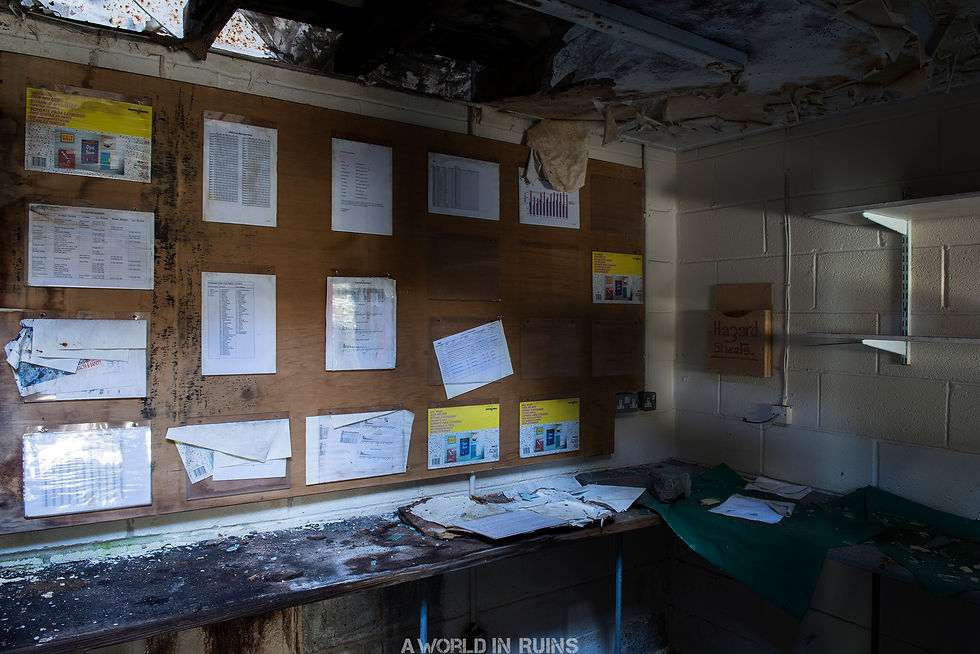
1996 saw the ownership change again, through a management buy out into the Samuel families hands, Nigel Samuel who resigned in 2004. The site closed for business in 2002 and has remained abandoned ever since.